Look up a PPWR recycled-content target
Choose a packaging category, year and exclusion-screening status to identify the relevant PPWR Article 7 target. The lookup preserves the conditional first-period start date and the plant-and-year measurement basis. Unknown classifications and selected exclusions do not receive an unconditional percentage. It is a reference aid, not a packaging compliance certificate.
Find a qualified Article 7 reference
Review the full Article 7(4)–(5) exclusions, including specified medical/pharmaceutical uses, compostable packaging, dangerous goods, specified foods, food-contact health conditions and plastic parts below 5% of unit mass. This selector records your review; it does not decide eligibility.
Screen before using a target
Read Article 7(4)–(5) and confirm the complete packaging category. The exclusion selector records your screening result; it does not determine eligibility for an exclusion. If you cannot confirm the category or screening status, keep “unknown” selected and use the official wording to resolve the question.
Read the qualified result
The first target table uses the later-date condition stated in Article 7(1). The exact methodology-act entry date is not yet verified here, so the result remains conditional. The target guide uses the same versioned data. No annual interpolation or assumption about other packaging obligations is made.
Comparison at a glance
| Selection | Result behaviour |
|---|---|
| Unknown category or screening | Review needed; no percentage |
| Exclusion selected | No target assigned; verify the exact basis |
| Before 2030 | No Article 7(1) target assigned for that year |
| 2030–2039 | First-table percentage with date condition |
| 2040 onward | Second-table percentage with scope qualifications |
Worked example
For confirmed contact-sensitive PET packaging excluding beverage bottles, no applicable exclusion selected: the first-table target is 30%, with its conditional start. The 2040 table gives 50%. For a fictional 100 t within an already confirmed accounting scope, those percentages correspond to 30 t and 50 t respectively. The arithmetic does not validate the scope or the recycled-content evidence.
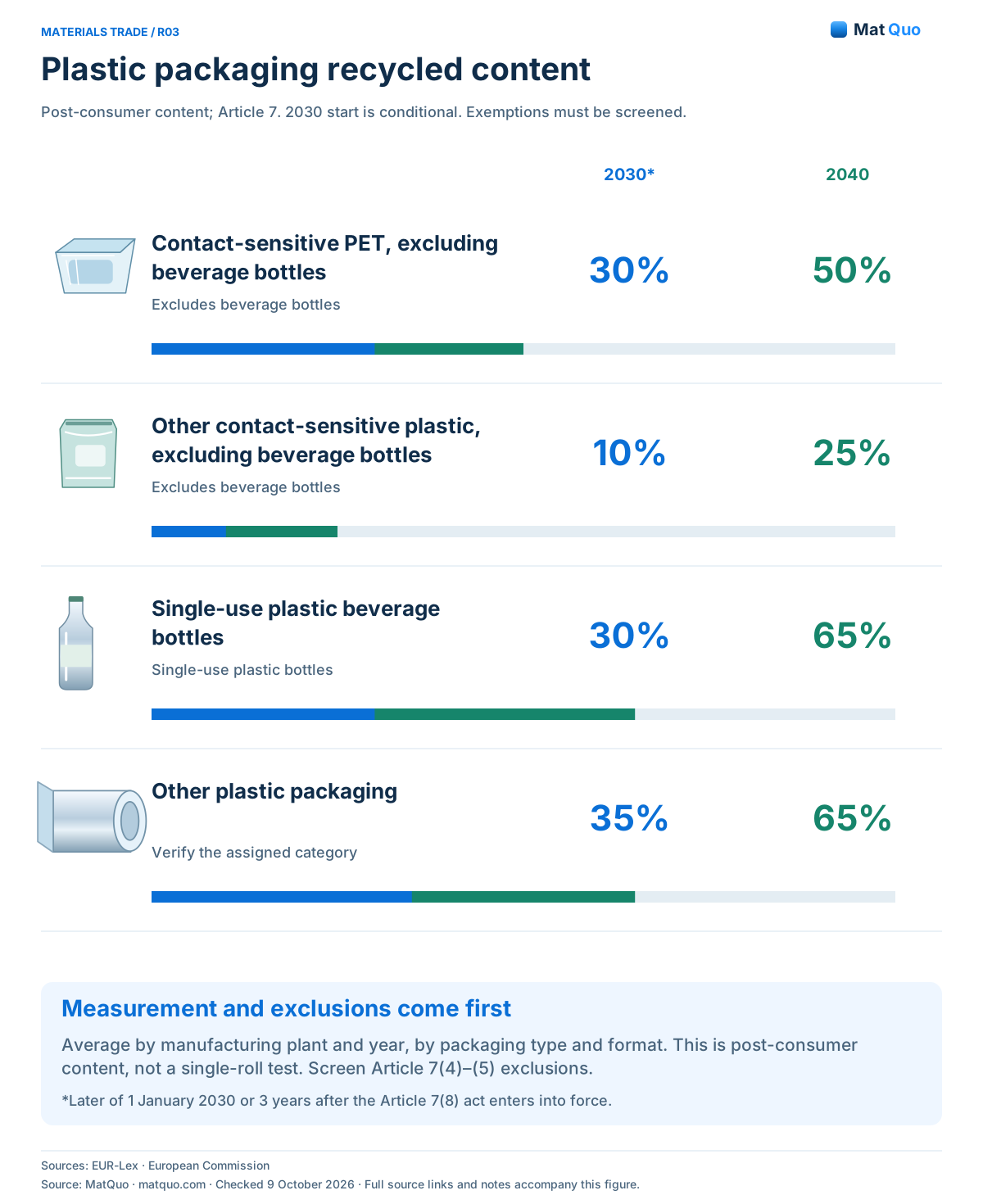
Plastic packaging recycled content
Post-consumer content; Article 7. 2030 start is conditional. Exemptions must be screened.
Detailed poster: scroll horizontally on a small screen, or open the full-size figure. The readable text equivalent is below.
EUR-Lex • Regulation (EU) 2025/40 · European Commission • PPWR implementation · Checked
Text equivalent and notes
- Contact-sensitive PET
- Excluding beverage bottles. 2030*: 30% → 2040: 50%
- Other contact-sensitive plastic
- Excluding beverage bottles. 2030*: 10% → 2040: 25%
- Single-use beverage bottles
- Plastic beverage bottles. 2030*: 30% → 2040: 65%
- Other plastic packaging
- Category assignment must be verified. 2030*: 35% → 2040: 65%
- Measurement basis
- Average by manufacturing plant. and year, by packaging type. and format; not a single roll test.
- Before using the table
- *Later of 2030 or 3 years after. the Article 7(8) act enters force.. Check Article 7(4)–(5) exclusions.
Embed with credit
Common mistakes
- Choosing the nearest category when the classification is unresolved.
- Reading a conditional 2030 result as proof of a fixed application date.
- Using the result to certify food-contact suitability or recyclability.
Questions and answers
Why does the default result ask for review?
The tool starts with unresolved classification or exclusion screening rather than assuming that the package is in scope. Confirm those facts before requesting a target. This prevents a plausible-looking percentage from concealing an unanswered legal question and keeps the result tied to the packaging category and evidence you actually supplied.
Why does a 2035 selection use the first target table?
The lookup does not invent intermediate percentages between the statutory target years. It identifies the relevant table for the selected period while preserving the first-period act dependency. Check the actual application date and any later amendments before relying on the result for a particular year, packaging type and manufacturing accounting scope.
Where does the displayed percentage come from?
The guide, graphic and lookup share a versioned Article 7 dataset with the source and checked date shown on the page. The dataset records category targets, measurement basis and the unresolved act-date dependency. Follow the official regulation and implementation links when reviewing a specific obligation or checking for a later change.
Sources and review scope
- EUR-Lex • Regulation (EU) 2025/40 — Articles 3, 6, 7, 12, 29, 44–45 and 71.
- European Commission • PPWR implementation — Implementation status checked; act-dependent dates remain conditional.