Containers, trucks and ships for materials
Choose transport equipment from the material’s packed form, loading method and handling requirements, then check dimensions and mass independently. Bags, palletised resin, bulk pellets and liquids can need different equipment. A published container or trailer specification is a named-model example; the assigned unit and route must be confirmed before dispatch.
Define cargo before selecting equipment
Record whether the material travels in boxes, bags, big bags, a bulk liner or a tank system. Add the actual packed dimensions, net mass, packaging tare and loading or discharge requirements. A small volume does not make a liquid suitable for a dry container, and a large nominal capacity does not establish product compatibility.
Connect the transport legs
Container, road trailer and vessel decisions belong to one shipment plan but describe different equipment. Use the container guide for unit dimensions, the trailer guide for access and floor space, and the ship guide for cargo systems. Confirm every transfer interface.
Comparison at a glance
| Cargo form | Planning question | Evidence needed |
|---|---|---|
| Palletised bags | Can the loaded unit enter and fit? | Packed dimensions, door and floor plan |
| Bulk pellets | How much mass fits the usable volume? | Measured bulk density and fill allowance |
| Liquid | Is the tank approved and compatible? | Product, tank and cleaning requirements |
| Heavy or awkward unit | Can it be handled and secured? | Lifting, lashing and route approval |
Worked example
Fictional bagged shipment: 30 pallets each carry 500 kg product and 25 kg packaging. The commercial quantity is 15,000 kg, but the cargo mass is 15,750 kg. A transport booking based only on product tonnes omits 750 kg. Check that complete mass against the confirmed allowance for each leg.
Five road trailer choices
Named model examples. Confirm road allowance, cargo compatibility and loading access.
Detailed poster: scroll horizontally on a small screen, or open the full-size figure. The readable text equivalent is below.
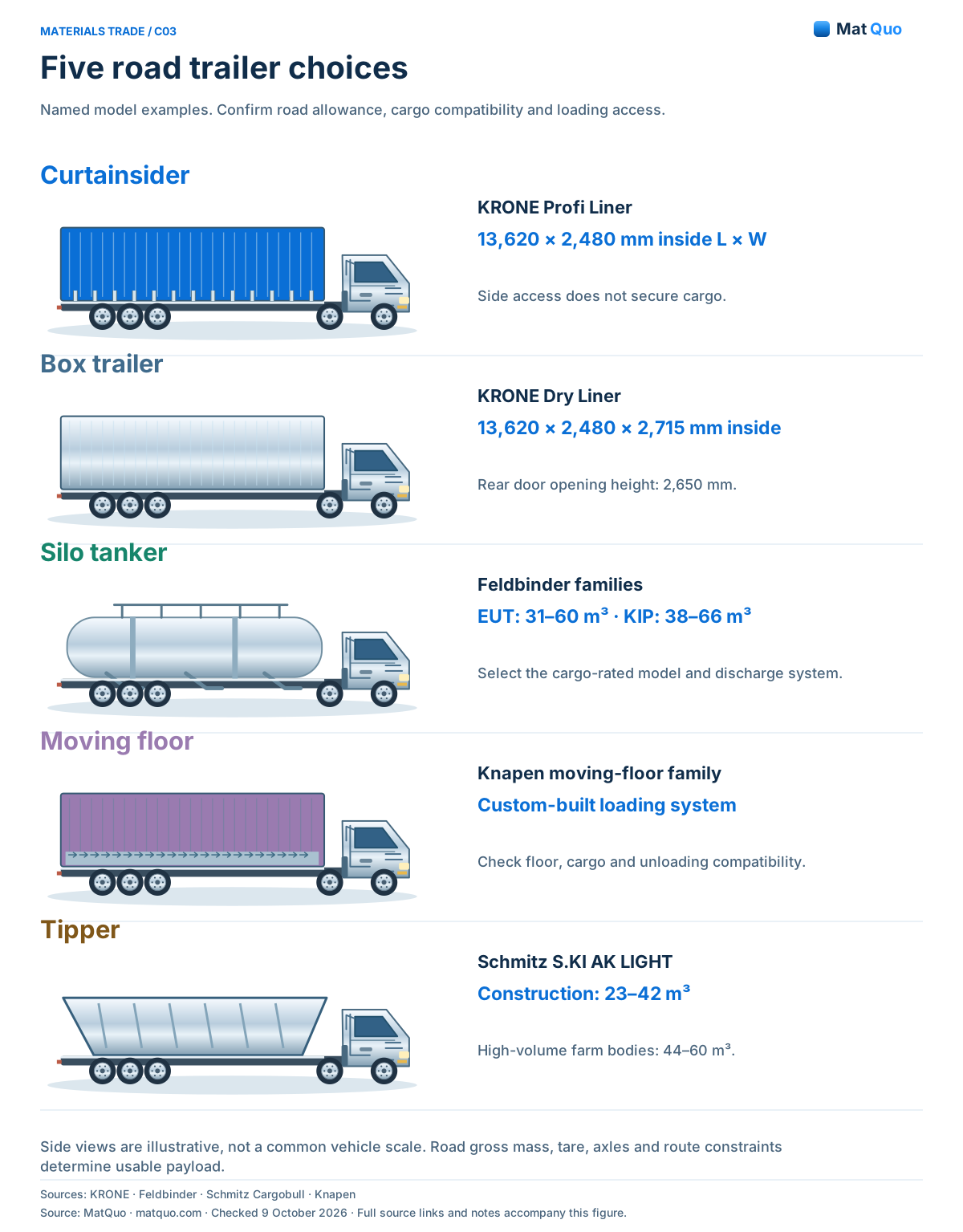
Vehicle sizes and payloads vary by builder and configuration; check the approved vehicle and route with the carrier.
KRONE • Profi Liner · KRONE • Dry Liner · Feldbinder • Road silo vehicles · Schmitz Cargobull • S.KI AK LIGHT · Knapen • Product range 2023 · Checked
Text equivalent and notes
- Curtainsider
- KRONE Profi Liner example. Inside L × W: 13,620 × 2,480 mm. Side access does not secure cargo.
- Box trailer
- KRONE Dry Liner example. Inside: 13,620 × 2,480 × 2,715. Rear opening height: 2,650 mm
- Silo tanker
- Feldbinder EUT family: 31–60 m³. KIP family: 38–66 m³. Choose the specific cargo-rated unit.
- Moving floor
- Knapen moving-floor family. Confirm floor and cargo suitability.
- Tipper
- Schmitz S.KI AK LIGHT. Construction bodies: 23–42 m³. High-volume farm bodies: 44–60 m³
Embed with credit
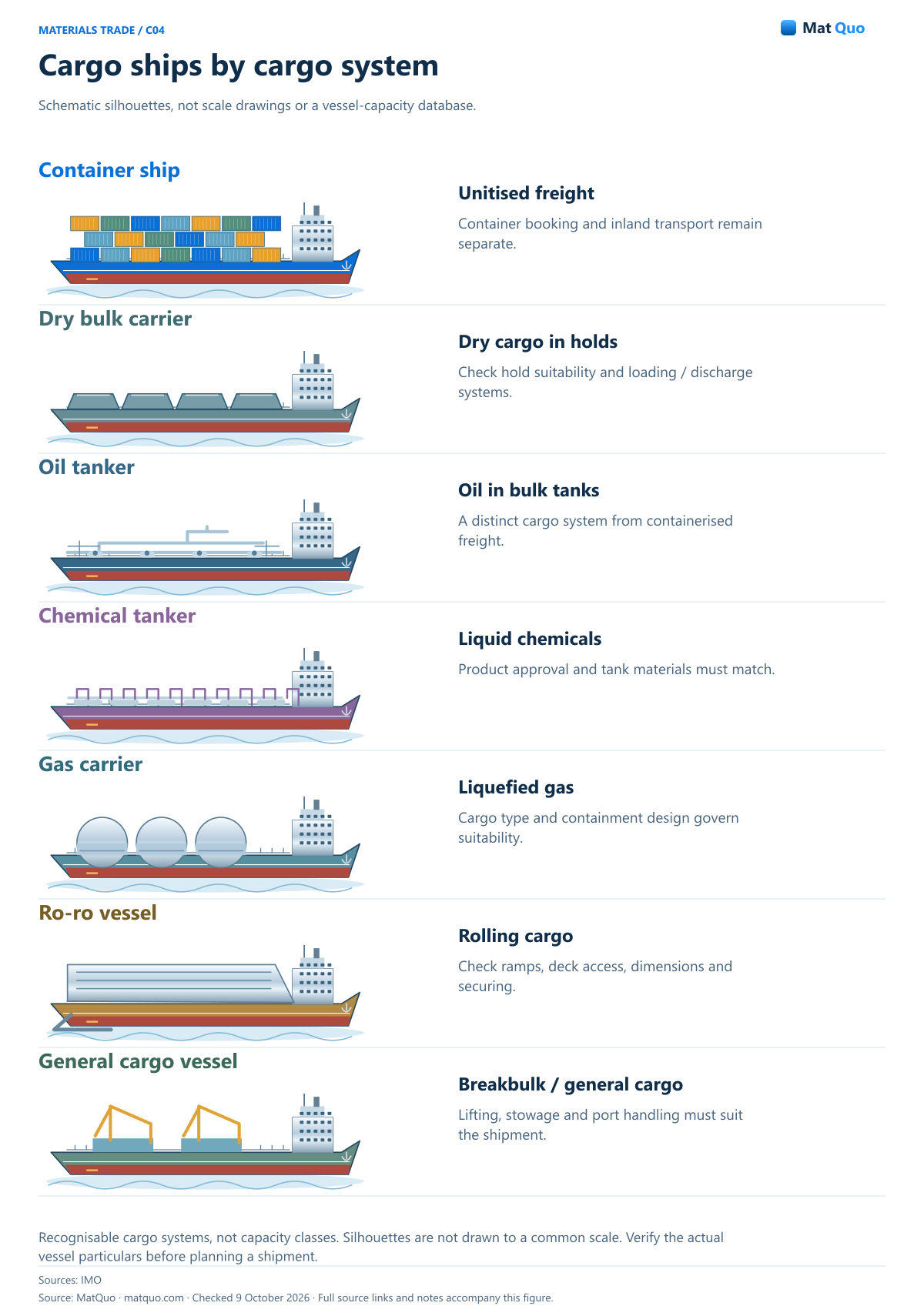
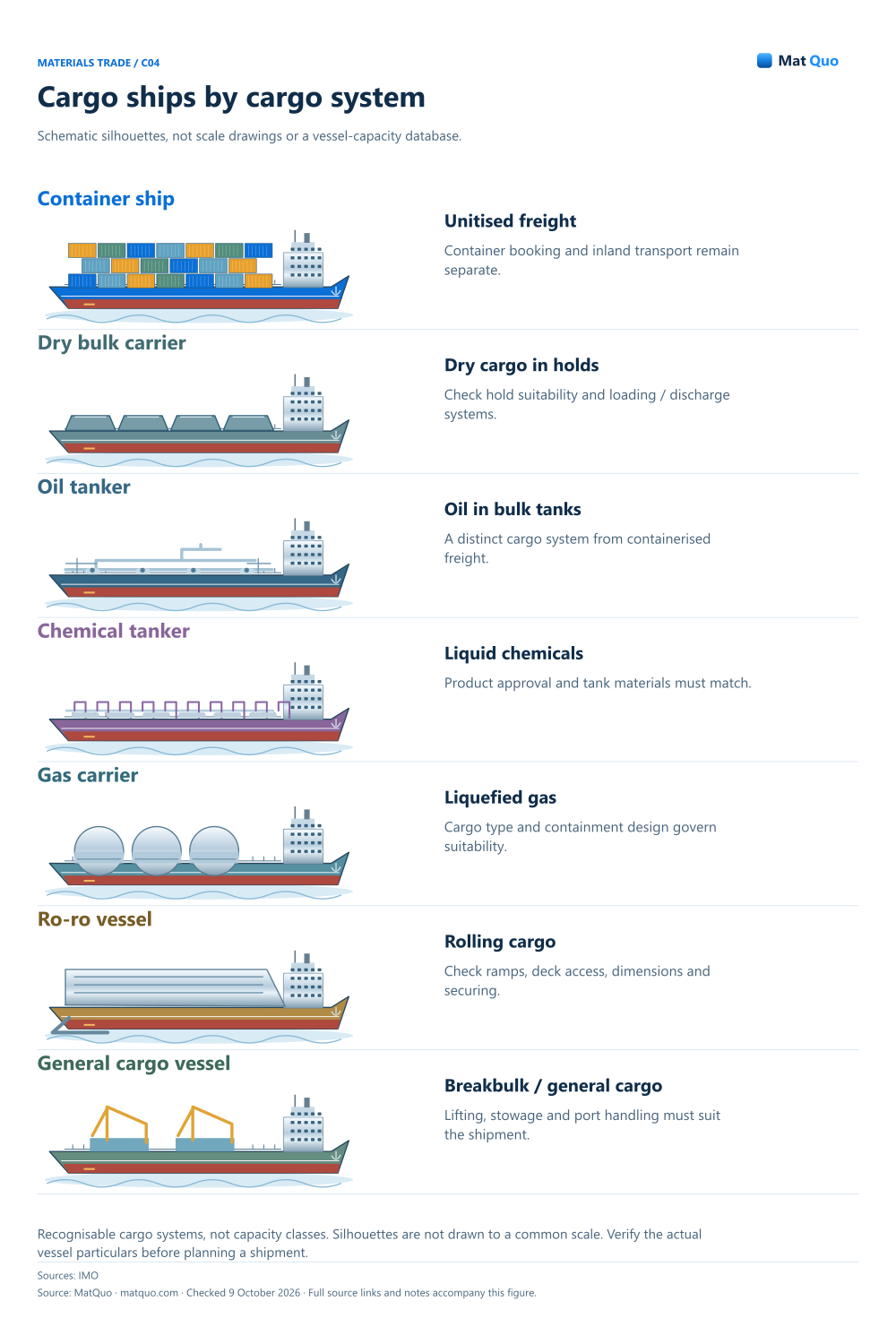
Cargo ships by cargo system
Schematic silhouettes, not scale drawings or a vessel-capacity database.
Detailed poster: scroll horizontally on a small screen, or open the full-size figure. The readable text equivalent is below.
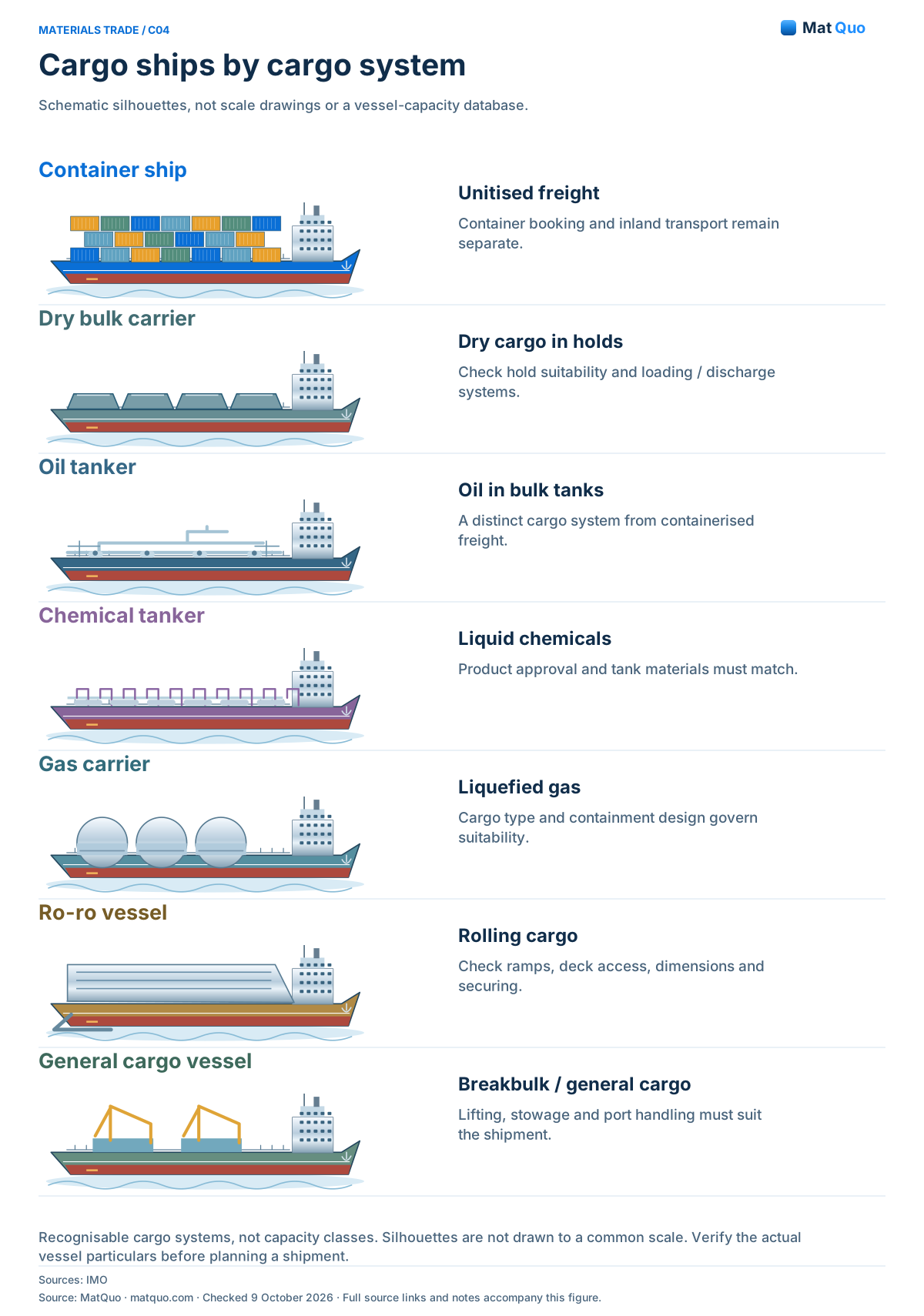
Vessel sizes and capacities vary by builder and vessel; check the booked vessel particulars with the carrier.
IMO • Ship safety regulation · Checked
Text equivalent and notes
- Container ship
- Unitised freight in containers.. Check the container booking. and inland transport separately.
- Dry bulk carrier
- Unpackaged dry cargo in holds.. Cargo handling and hold. compatibility determine suitability.
- Oil tanker
- Oil carried in bulk tanks.. Tank systems differ from. containerised freight.
- Chemical tanker
- Liquid chemicals in bulk.. Cargo approval and tank materials. must match the specific product.
- Gas carrier
- Liquefied gas cargo systems.. Gas type and containment design. govern the vessel choice.
- Ro-ro vessel
- Rolling cargo uses ramps.. Vehicle dimensions, deck access. and securing remain constraints.
- General cargo vessel
- Breakbulk or general cargo.. Lifting, stowage and port handling. must suit the shipment.
Embed with credit
Common mistakes
- Selecting equipment from nominal cubic capacity alone.
- Transferring a manufacturer’s technical rating directly into a road-legal payload assumption.
- Ignoring the door or transfer equipment because the interior is large enough.
Questions and answers
Which transport calculator should I start with?
Use the container calculator for a specific enclosed unit or bulk-volume exercise, and the truck calculator for pallet floor layouts in a trailer. Start with the actual packed cargo and confirmed equipment data. Keep the resulting geometry and mass checks separate from route, axle distribution and cargo-securing acceptance.
Why are equipment examples labelled by model?
Published dimensions and tare values can differ between manufacturers and units in the same nominal category. A named example makes the source auditable without implying that every container or trailer is identical. Before booking, replace the example with the actual equipment specification and any more restrictive operational or route allowance.
Does a vessel choice establish container payload?
No. The vessel’s cargo system, the individual container rating and the inland vehicle allowance answer different questions. A complete shipment can pass one check and fail another. Keep equipment identification, gross cargo mass and transfer constraints together so that every operator can confirm the part of the journey it controls.
Sources and review scope
- Hapag-Lloyd • Container fleet — Dimensions vary by manufacturer and equipment. Named examples only.
- KRONE • Profi Liner — Model SDP 27 eLB50-CS: internal length 13620 mm, width 2480 mm; technical rating is not road cargo allowance.
- Feldbinder • Road silo vehicles — EUT family 31–60 m³; KIP family 38–66 m³. Actual model and cargo compatibility required.
- IMO • Ship safety regulation — Ship categories and cargo-specific regulation; no generic capacity claims.
- KRONE • Dry Liner — Model SDK 27 eLB41-STG: inside 13620 × 2480 × 2715 mm; rear opening height 2650 mm.
- Schmitz Cargobull • S.KI AK LIGHT — Construction bodies 23–42 m³; agricultural high-volume bodies 44–60 m³. No invented payload.
- Knapen • Product range 2023 — Moving-floor family; numerical presets omitted pending model confirmation.