Cargo ship types at a glance
Cargo ships are designed around different cargo systems: containers, dry bulk, bulk liquids, liquefied gases, rolling cargo or general cargo. Start with the material’s transport form and handling needs. The vessel category alone does not establish product compatibility, shipment capacity or a usable port operation; those require a specific booking and equipment review.
Connect material form to handling
Bagged polymer in a container and unpackaged bulk material are different logistics propositions even when their net tonnage is identical. Likewise, a liquid product in a tank container is not booked on the same basis as a parcel in a ship’s bulk tanks. Identify the cargo system before asking for a comparable freight quotation.
Build a comparable booking request
Provide cargo description, packaging, gross mass, dimensions where relevant, ports and handling requirements. Ask which party arranges terminal services and what evidence is required for acceptance. Use the Incoterms guide to keep the sale’s delivery point distinct from the vessel’s route and the freight invoice.
Comparison at a glance
| Ship family | Cargo system | Question to resolve |
|---|---|---|
| Container ship | Intermodal units | Container type and inland interfaces |
| Dry bulk carrier | Dry cargo in holds | Hold compatibility and terminal handling |
| Oil / chemical tanker | Bulk liquid tanks | Product approval and tank suitability |
| Gas carrier | Gas-specific containment | Cargo and containment requirements |
| Ro-ro | Rolling cargo and ramps | Deck access, dimensions and securing |
| General cargo | Breakbulk / general cargo | Lifting and stowage arrangements |
Worked example
Fictional comparison: 400 bags × 25 kg contains 10 t of product. With 0.15 kg per empty bag and ten 25 kg pallets, packaging adds 60 + 250 = 310 kg. The packed shipment is 10.31 t gross before any extra restraints. A 10 t unpackaged bulk enquiry describes a different handling proposition and should not be compared as if the two bookings were identical.
Cargo ships by cargo system
Schematic silhouettes, not scale drawings or a vessel-capacity database.
Detailed poster: scroll horizontally on a small screen, or open the full-size figure. The readable text equivalent is below.
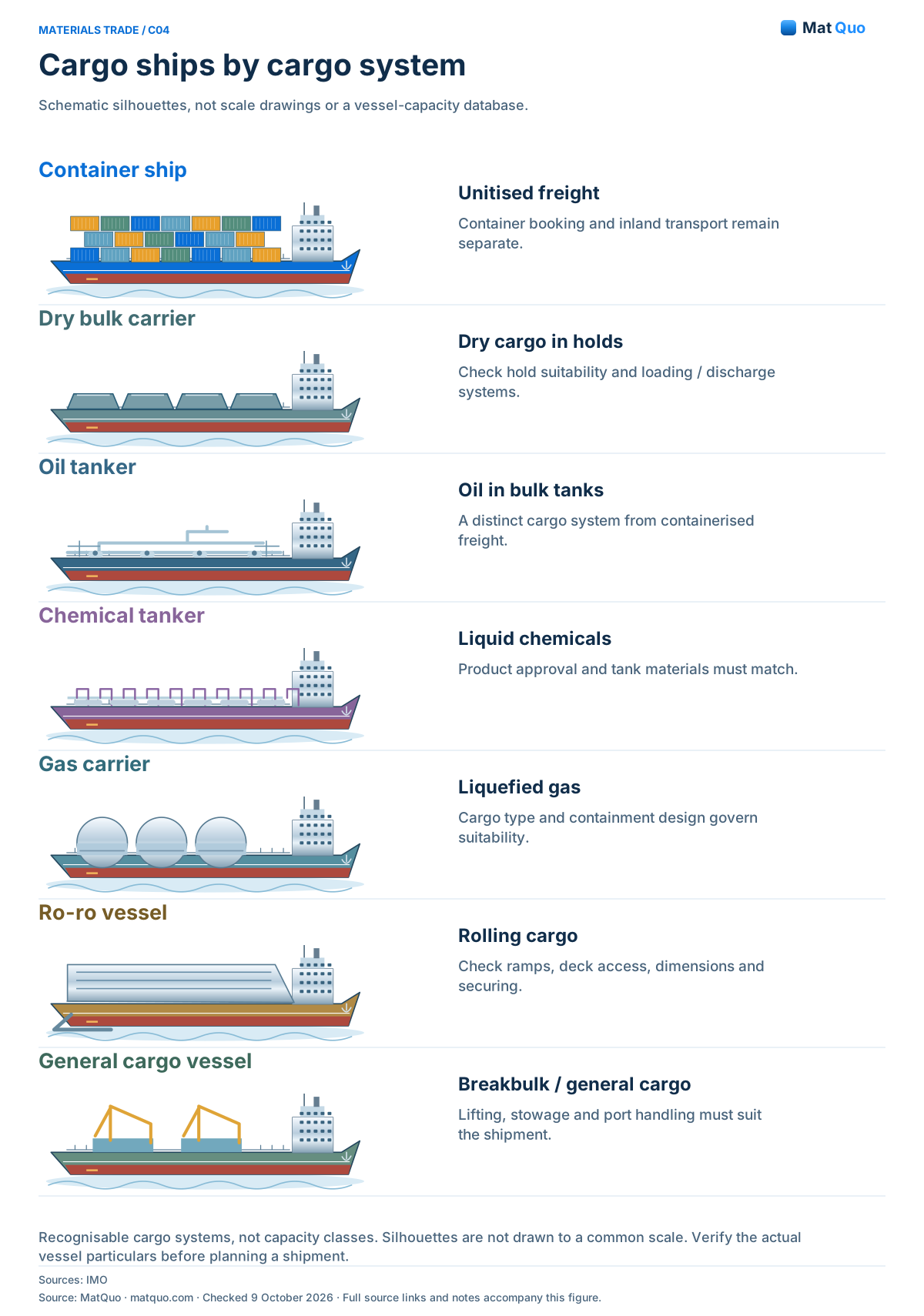
Vessel sizes and capacities vary by builder and vessel; check the booked vessel particulars with the carrier.
IMO • Ship safety regulation · Checked
Text equivalent and notes
- Container ship
- Unitised freight in containers.. Check the container booking. and inland transport separately.
- Dry bulk carrier
- Unpackaged dry cargo in holds.. Cargo handling and hold. compatibility determine suitability.
- Oil tanker
- Oil carried in bulk tanks.. Tank systems differ from. containerised freight.
- Chemical tanker
- Liquid chemicals in bulk.. Cargo approval and tank materials. must match the specific product.
- Gas carrier
- Liquefied gas cargo systems.. Gas type and containment design. govern the vessel choice.
- Ro-ro vessel
- Rolling cargo uses ramps.. Vehicle dimensions, deck access. and securing remain constraints.
- General cargo vessel
- Breakbulk or general cargo.. Lifting, stowage and port handling. must suit the shipment.
Embed with credit
Common mistakes
- Comparing freight prices without the same packing and handling scope.
- Assuming every tanker can carry every liquid or gas.
- Inferring vessel capacity from a schematic silhouette.
Questions and answers
Can one material travel on different ship types?
Yes, its packaging and transport form can change the cargo system used. A material might travel as packaged freight in a container or as a suitable bulk parcel under a different arrangement. Compare the complete handling and packaging requirements, not just the material name or quoted price per tonne.
Does the graphic show relative vessel sizes?
No. The silhouettes identify broad cargo systems and are explicitly schematic. They do not establish dimensions, deadweight or available shipment capacity. Obtain the details of the proposed vessel or service from the booking provider when those values matter, and verify any terminal or route constraints separately for the actual shipment.
Why are no generic freight rates included?
A useful rate needs a defined route, date, cargo form, quantity and service scope. This guide has not verified such quotations and does not supply invented allowances. Request a dated offer with its included and excluded charges, then use those confirmed amounts in a comparison based on the same delivery boundary.
Sources and review scope
- IMO • Ship safety regulation — Ship categories and cargo-specific regulation; no generic capacity claims.