Naphtha vs ethane: feedstocks and cracker outputs
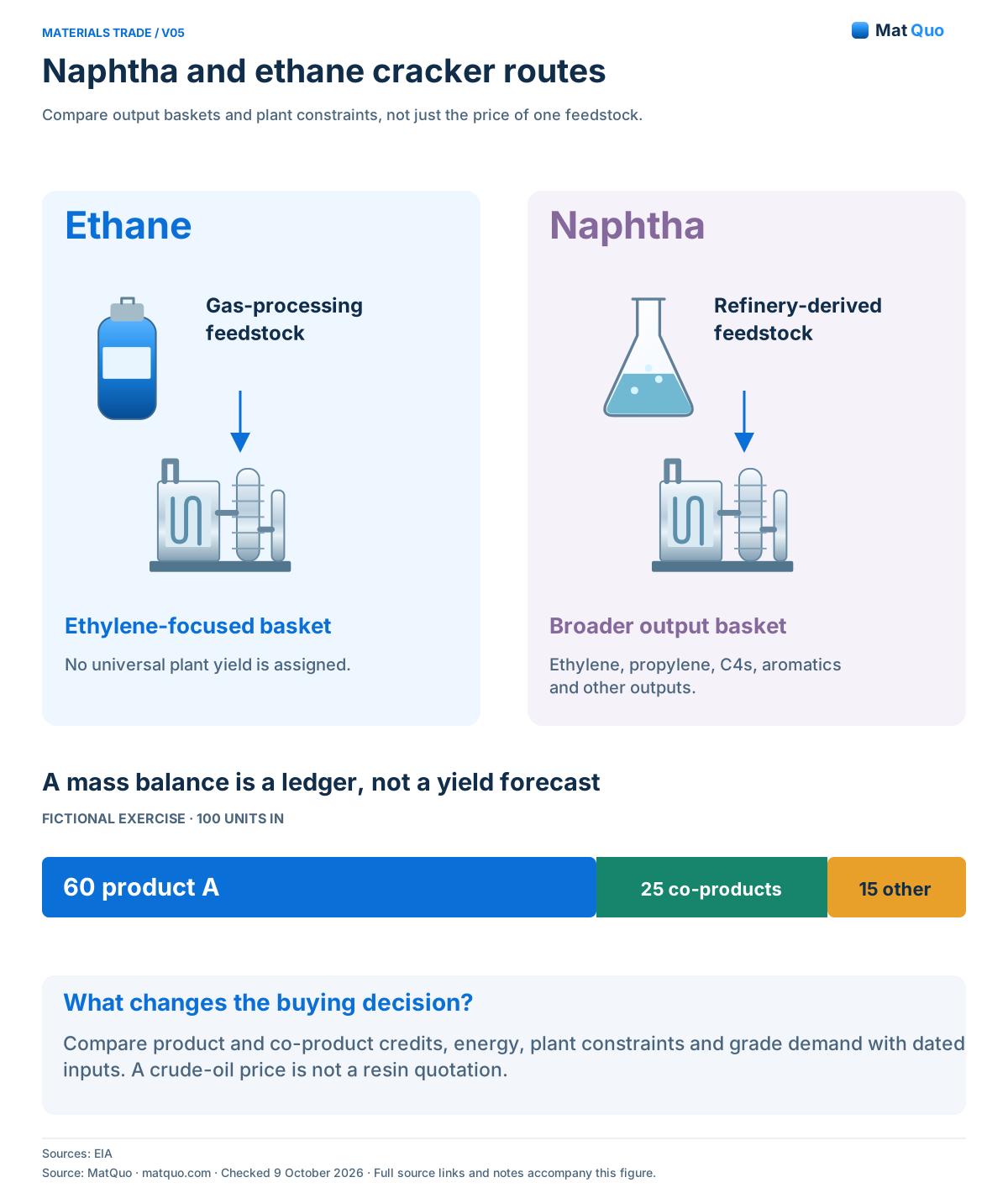
Ethane and naphtha are different steam-cracker feedstocks with different output baskets. Ethane is associated with an ethylene-focused route, while naphtha produces a broader mix including valuable co-products. Compare the whole plant and product system, not a single feedstock price, and avoid assigning universal yields or resin-price formulas to either route.
Compare an output basket, not one molecule
EIA’s technical explanation identifies naphtha co-products such as propylene, butadiene and aromatics. That broader output basket affects how a commercial comparison is constructed. The historical source’s prices and forecasts are not used as current values here. No fixed percentage yield is supplied because none has been verified as appropriate to the specific plant.
Separate technical and commercial questions
Feedstock availability, plant configuration and required outputs are technical constraints. Feedstock prices, energy costs and co-product credits are commercial inputs that need a date and consistent currency basis. Do not hide a missing co-product value inside an assumed “conversion factor” that appears precise but cannot be traced to evidence.
Follow the implication through to resin
Ethylene supply feeds PE production, while PP requires propylene from an appropriate route. That does not make a local crude price a direct quotation for either finished resin. Continue to the PE grade guide and PP grade guide after the introductory journey to distinguish monomer supply from the purchased grade.
Comparison at a glance
| Question | Ethane route | Naphtha route |
|---|---|---|
| Feedstock context | Gas-processing stream | Refinery-derived stream |
| Output emphasis | Ethylene-focused | Broader co-product basket |
| Cost comparison | Use dated actual inputs | Include evidenced co-product treatment |
| Yield assumption | No universal yield published here | No universal yield published here |
Worked example
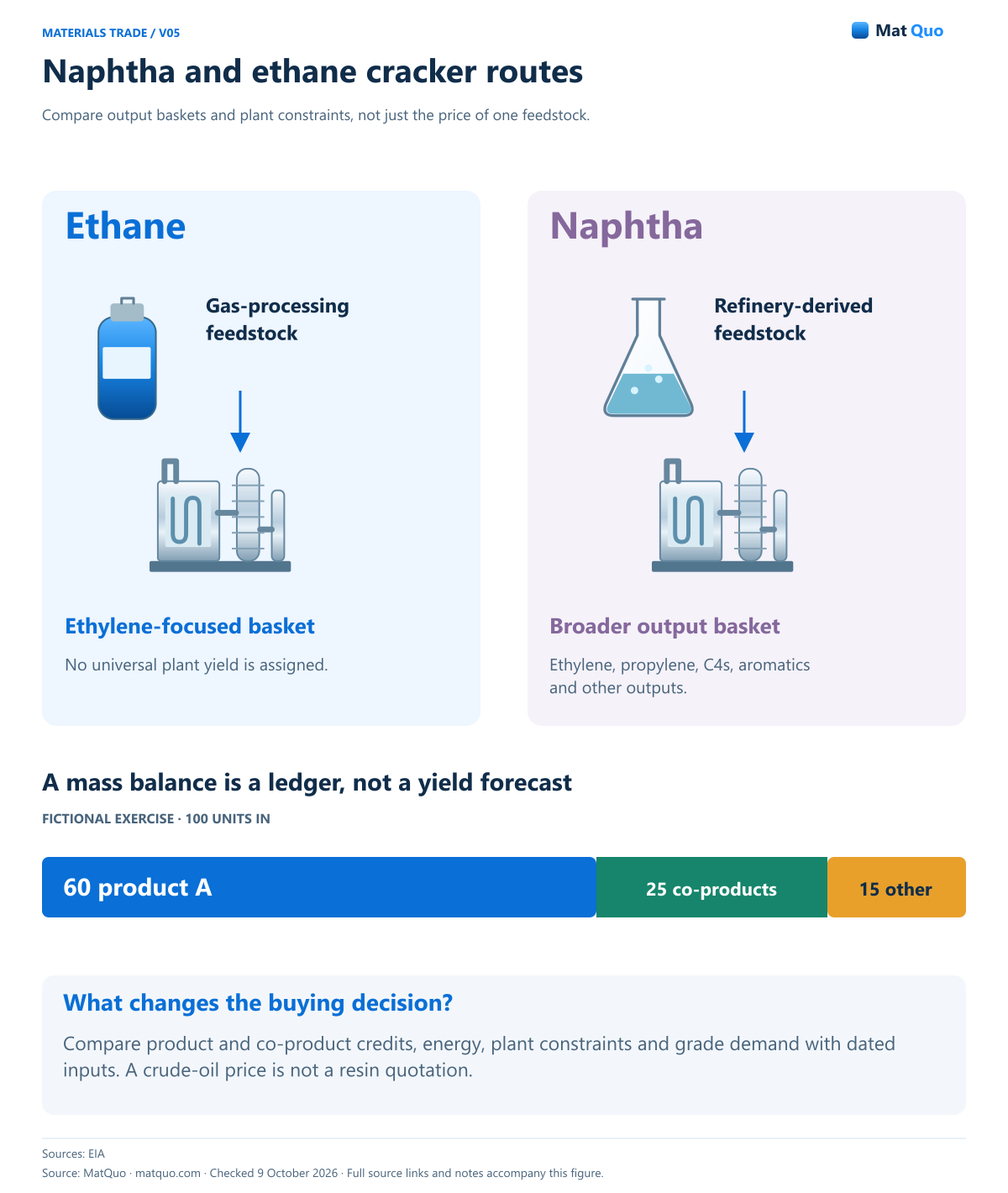
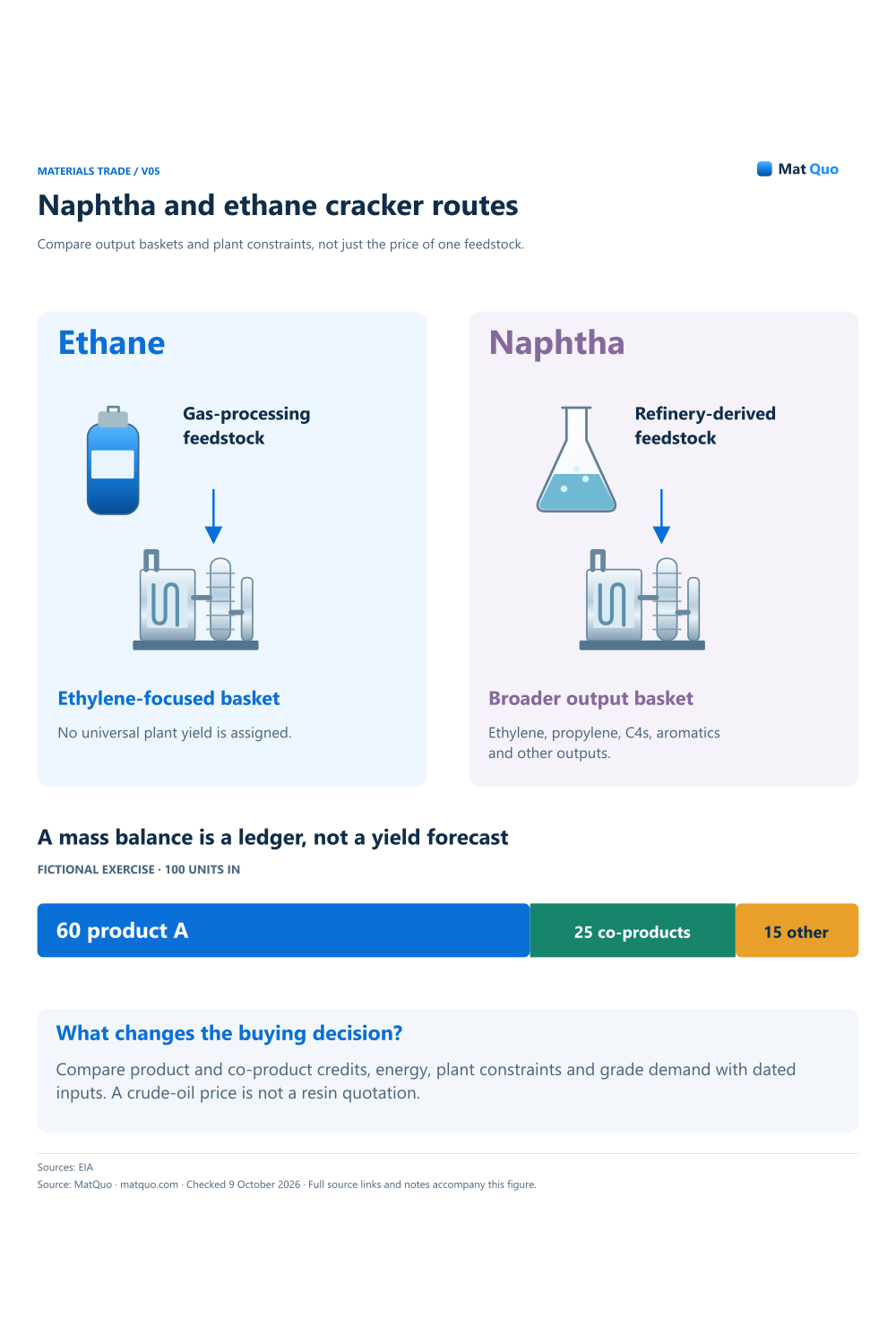
Fictional accounting exercise, not a plant yield: 100 mass units enter; 60 leave as product A, 25 as co-products and 15 as other accounted outputs or losses. Total output is 100. If a report shows only product A, its 60% yield does not mean 40% disappeared; the other categories need their own ledger and commercial treatment.
Naphtha and ethane cracker routes
Compare output baskets and plant constraints, not just the price of one feedstock.
Detailed poster: scroll horizontally on a small screen, or open the full-size figure. The readable text equivalent is below.
EIA • Cracker feedstocks · EIA • Refining process · Checked
Text equivalent and notes
- Ethane route
- Gas-processing feedstock. Ethylene-focused output basket. Do not assign a universal yield.
- Naphtha route
- Refinery-derived feedstock. Ethylene plus more co-products. Examples: propylene, C4s, aromatics
- Fictional mass-balance exercise
- 100 units in = 60 product A. + 25 co-products + 15 other. Exercise values, not plant yields.
- Buying implication
- Compare product and co-product. credits, energy and grade demand.. Crude price is not a resin quote.
Embed with credit
Common mistakes
- Using an old source’s market prices as current prices.
- Calling all non-ethylene output waste.
- Applying a fixed crude-to-PE or ethane-to-resin price multiplier without evidence.
Questions and answers
Is ethane always the cheaper route?
No universal current cost ranking is established here. A comparison requires dated feedstock and energy prices, actual plant constraints and a consistent treatment of the output basket. Naphtha co-products can have commercial value, while an ethylene-focused route serves a different balance. Use verified inputs for the specific comparison instead of a permanent ranking.
Why does the guide avoid numerical cracker yields?
A meaningful yield belongs to a specified feedstock, process and operating basis. This guide has not verified a representative current plant dataset that would justify a universal percentage. The numerical ledger is explicitly fictional and teaches mass-balance reconciliation; it should not be used to predict actual monomer output from a shipment of feedstock.
Does a broader co-product basket automatically improve economics?
No. More product categories create additional values to measure, not an automatic profit advantage. Each needs a verified quantity, usable specification and commercial treatment. Compare the complete system with dated inputs and clearly stated boundaries, and leave unverified credits unresolved instead of inventing prices to make the total look complete.
Sources and review scope
- EIA • Cracker feedstocks — 2022 technical discussion: naphtha co-products. Historical prices and forecasts excluded.
- EIA • Refining process — Distillation separates fractions; conversion changes molecules.
- OSHA • Petroleum refining — Atmospheric/vacuum separation; product boiling ranges are overlapping reference ranges, not tray settings.