FOB vs FCA for container shipments
For a container handed to a terminal before vessel loading, FCA often matches the practical handover better than FOB. FCA delivers to the carrier at a named point; FOB delivers onboard the vessel. Choose the rule around the evidence and control available at delivery, not simply because the shipment includes sea transport.
Map the terminal interval
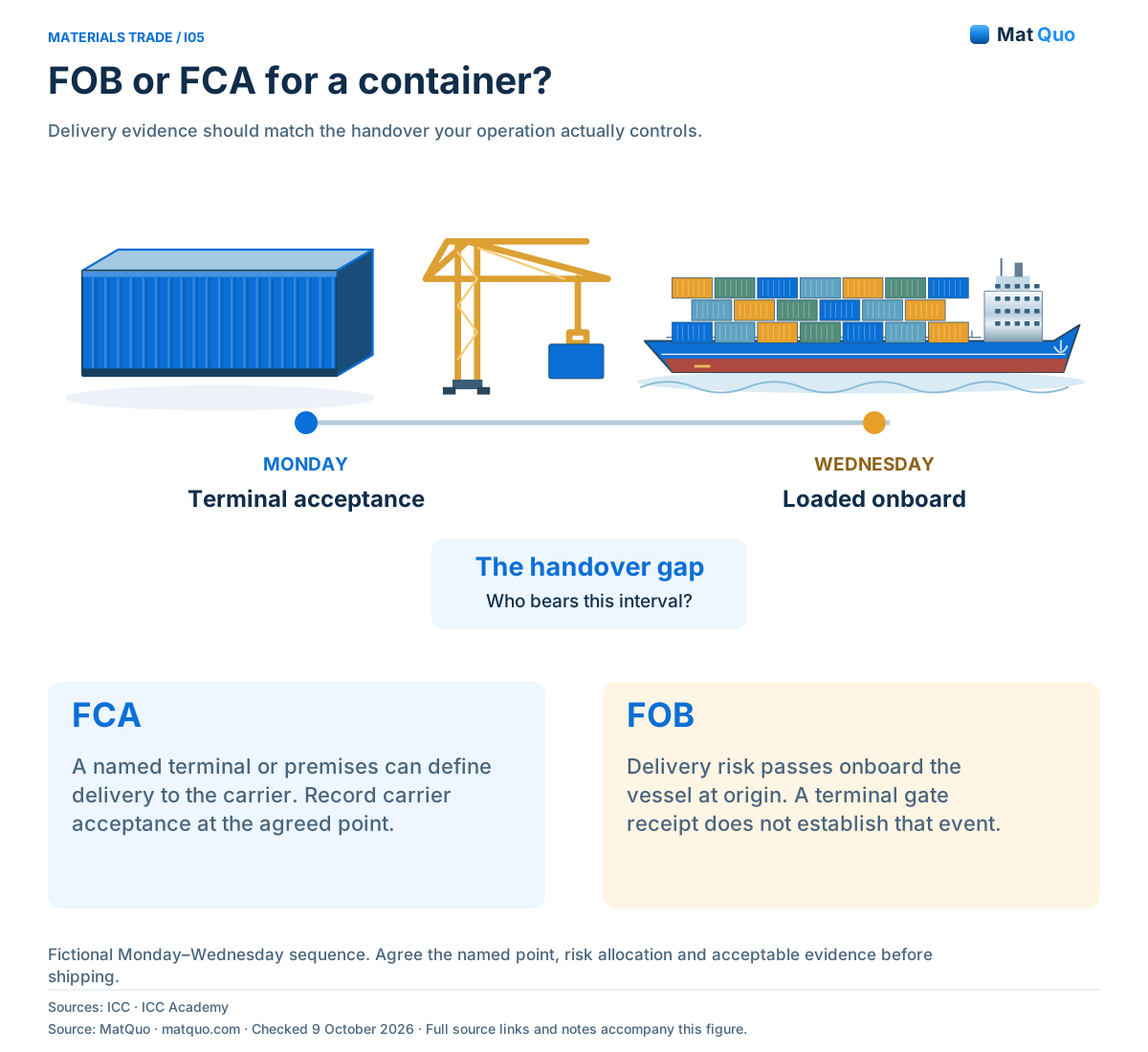
List dispatch, terminal acceptance, vessel loading and departure as separate events. Identify who controls each event and which document proves it. This exposes the interval between terminal delivery and onboard loading that a casual use of FOB can conceal. Do not rename a gate receipt as an onboard document.
Align trade and payment documents
Ask the freight provider and finance team which transport document is needed and when it becomes available. A contractual document requirement should be tested against the chosen delivery operation. If a payment arrangement requires an onboard document, review the relevant FCA options in the complete ICC rules rather than assuming FOB is the only workable answer.
Comparison at a glance
| Operational fact | FCA question | FOB question |
|---|---|---|
| Terminal accepts the box | Is this the named handover? | Who bears risk until onboard? |
| Loading is delayed | What evidence shows delivery? | What evidence shows loading? |
| Paperwork requirement | Can carrier instructions support it? | Does the document match the operation? |
Worked example
Fictional timeline: carrier terminal acceptance at 10:00 Monday; vessel loading at 10:00 Wednesday. There are 48 hours between the two events. A €200.00 storage invoice during that interval does not by itself identify the risk bearer. Use the agreed rule, named point and actual records to answer that separate question.
FOB or FCA for a container?
Delivery evidence should match the handover your operation actually controls.
Detailed poster: scroll horizontally on a small screen, or open the full-size figure. The readable text equivalent is below.
ICC • 2024 checklist · ICC Academy • FAS and FOB · ICC Academy • EXW and FCA · Checked
Text equivalent and notes
- FCA • carrier handover
- A named terminal or premises. can define the delivery point.. Record acceptance evidence.
- FOB • onboard delivery
- Risk transfers onboard the. vessel at the origin port.. A gate receipt is not onboard.
- Resolve the gap
- Example: terminal on Monday,. vessel loading on Wednesday.. Agree who bears that interval.
Embed with credit
Common mistakes
- Choosing FOB solely because the main carriage uses a ship.
- Equating terminal acceptance with vessel loading.
- Leaving the required transport document unresolved until after dispatch.
Questions and answers
Does FCA prevent shipment by sea?
No. FCA is an any-mode rule and can be used when a container journey includes road and sea legs. Its relevance comes from the carrier handover, not from excluding ships. Match the named delivery point to the actual terminal or collection operation and keep evidence of the carrier’s acceptance.
Does a terminal receipt prove FOB delivery?
A terminal receipt proves the event it records, which may be earlier than vessel loading. FOB delivery is onboard at the shipment port. Keep terminal acceptance and onboard evidence as separate records, and review any gap between them rather than assuming one document establishes both events for the transaction.
How should a buyer compare FCA and FOB quotations?
Ask for the same shipment, quantity and services, then list which origin movements and terminal activities each price includes. Record the different delivery events alongside the amounts. This produces both a financial comparison and an operational comparison without assuming that the cheapest headline quote also gives the preferred handover arrangement.
Sources and review scope
- ICC • 2024 checklist — Choice of delivery point; FCA for container terminals. No source artwork reproduced.
- ICC Academy • EXW and FCA — Loading, export formalities and FCA delivery.
- ICC Academy • FAS and FOB — Waterway rules; alongside versus onboard delivery.